Inner Wildnerness

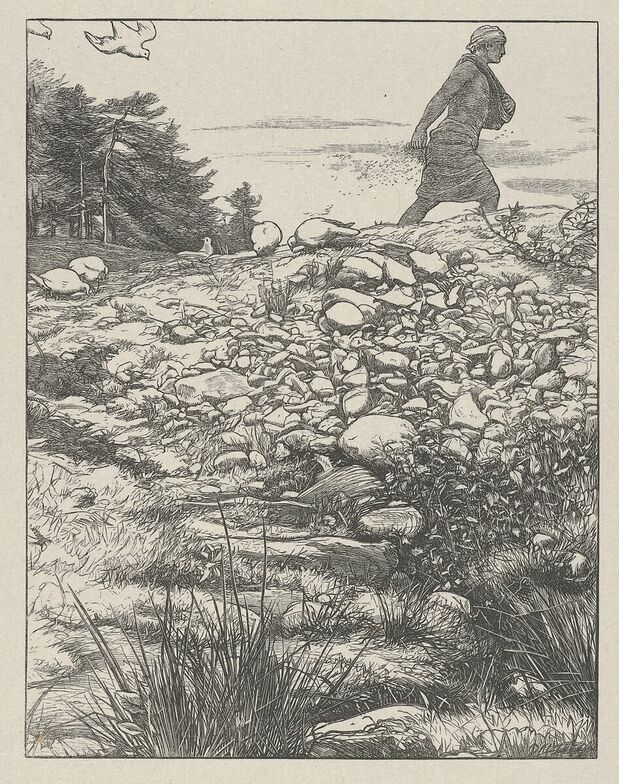
The gospel of Matthew - along with Mark and Luke - tell the story of the Holy Spirit, right after his baptism, driving Jesus into the wilderness. There he met Satan and, even more, God. Jesus also met, I daresay, himself, as he internalized the voice that spoke in his baptism: “You are my son, my beloved. With you, I am well pleased.”
In worship, we hear this story in Lent, and maybe Lent has captured our perspective on it. Jesus in the wilderness has much more to offer us than the frame of sin and temptation would suggest. Here is an invitation to come and find ourselves too - yes, the evil within, and also God-within-you.
The wilderness, to me, is a metaphor for the inner life. Lerita Coleman Brown, who I shared about recently, writes in her book about Howard Thurman, What Makes You Come Alive.
“a familiarity with one's inner life is a basic requirement of spiritual formation. By becoming acquainted with and operating from our own inward center, we are less subject to volatility or impermanence. If we choose this courageous work, the benefits are akin to the fruit of the Spirit. Here is where inner transformation morphs into the foundation for sacred calls. Thurman confirms the emphasis on spirituality as necessary for social change.”
I love every word of this. It resonates deeply with my own experience. It is what happened when I began to pray and read my bible outside of a church building: a real encounter akin to so many we read about in scripture, including Jesus in the wilderness. Forever after I am marked as one who knows God is real - not because someone told me so but from the inside out. My sacred calling (predating any idea of becoming a pastor) springs from this. I return to it often. Not as I ought but as I am able. When life and difficulty knocks me off-center, this is where I return. And here the Spirit sometimes knocks me off-center in the best way, driving me to care more, widen the circle, seek to change the circumstances, not just help people endure them. This wilderness inside is my well of living water. It is and can be for everyone.
To be sure, the inner life is a wilderness. Going there, learning its terrain, living there is indeed courageous work. Would we go if the Spirit did not drive us? It’s a place beyond our control, and who among us likes to surrender control? Lerita Coleman Brown continues,
"For some, the inner life may remain like an unread mystery novel left on a bookshelf. Lisa Colón DeLay uses the analogy of "flyover territory" to describe the segments of ourselves we may never delve into. "My inner world has unknown terrain, and so does yours," writes DeLay. "This expanse includes our minds, hearts, wills, and spirits. The wild land within also includes our experiences, aspirations, and memories. And like it or not, this territory also includes shadowy areas of hidden influences as well as triggering thoughts and feelings.... We all, at times, avoid looking at painful or difficult parts of our inner selves because of our fears or the commotion of our lives. Some people manage to avert their gaze from their interior terrains for a lifetime.”
If you are reading this, you are already on your way. Refuse to avert your gaze. Dare to visit your inner flyover territory. Befriend the shadow. Brave the wilderness. “Then the devil left him,” Matthew 4:11 says, “and suddenly angels came and waited on him.” If you know, you know.
Before and after this week's Parable of the Sower, Jesus’s family came out to fight with him and the people in his own hometown rejected him. The powers that be crucified him. The sin of the world weighed him down. But Jesus’s roots ran deeper than all these, thanks be to God! Jesus rose again.
Your roots run deeper too. They can run deeper still. And you too will rise with Jesus in the wilderness.
Pastor Clark Olson-Smith